
Last updated August 26, 2026
Free on-site gate assessment - hinges, posts, and your LiftMaster or Nice gate operator checked before anything is quoted
The assessment is free and the quote is the invoice.
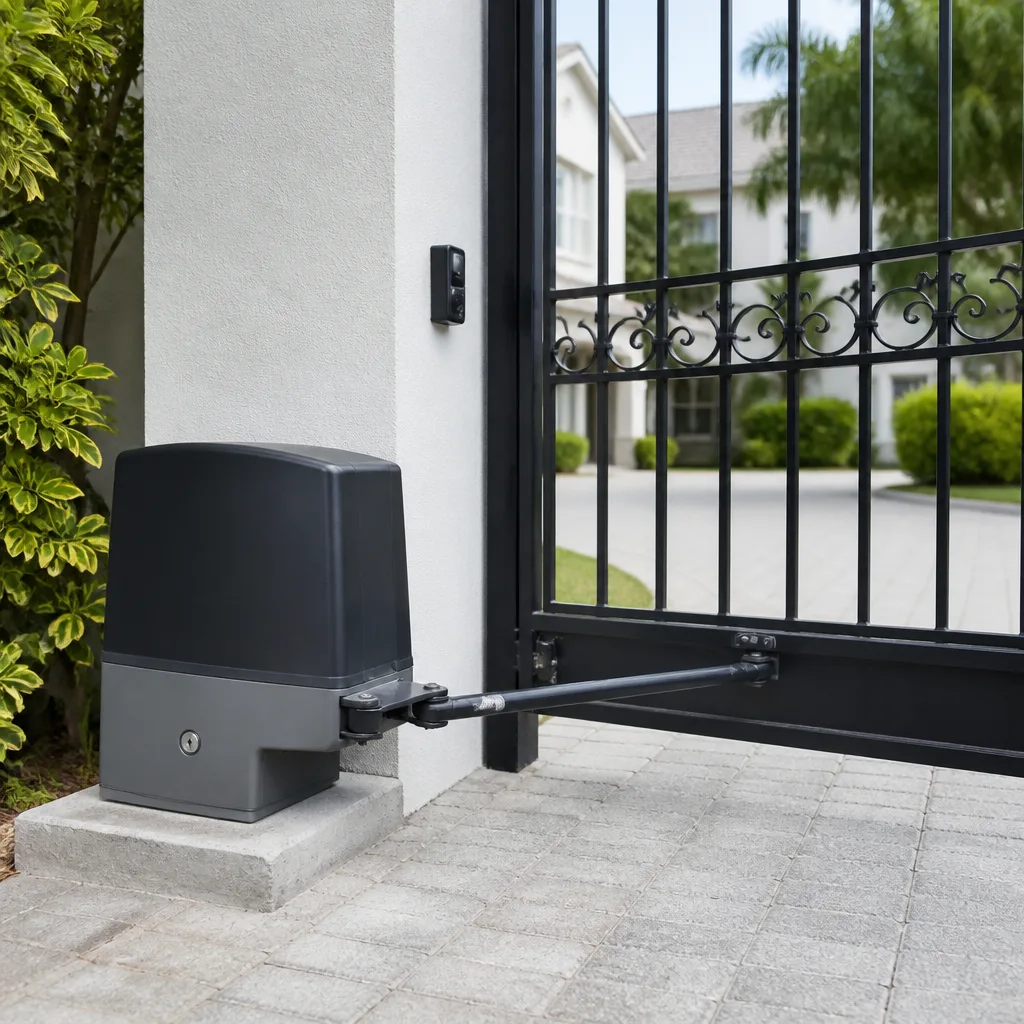
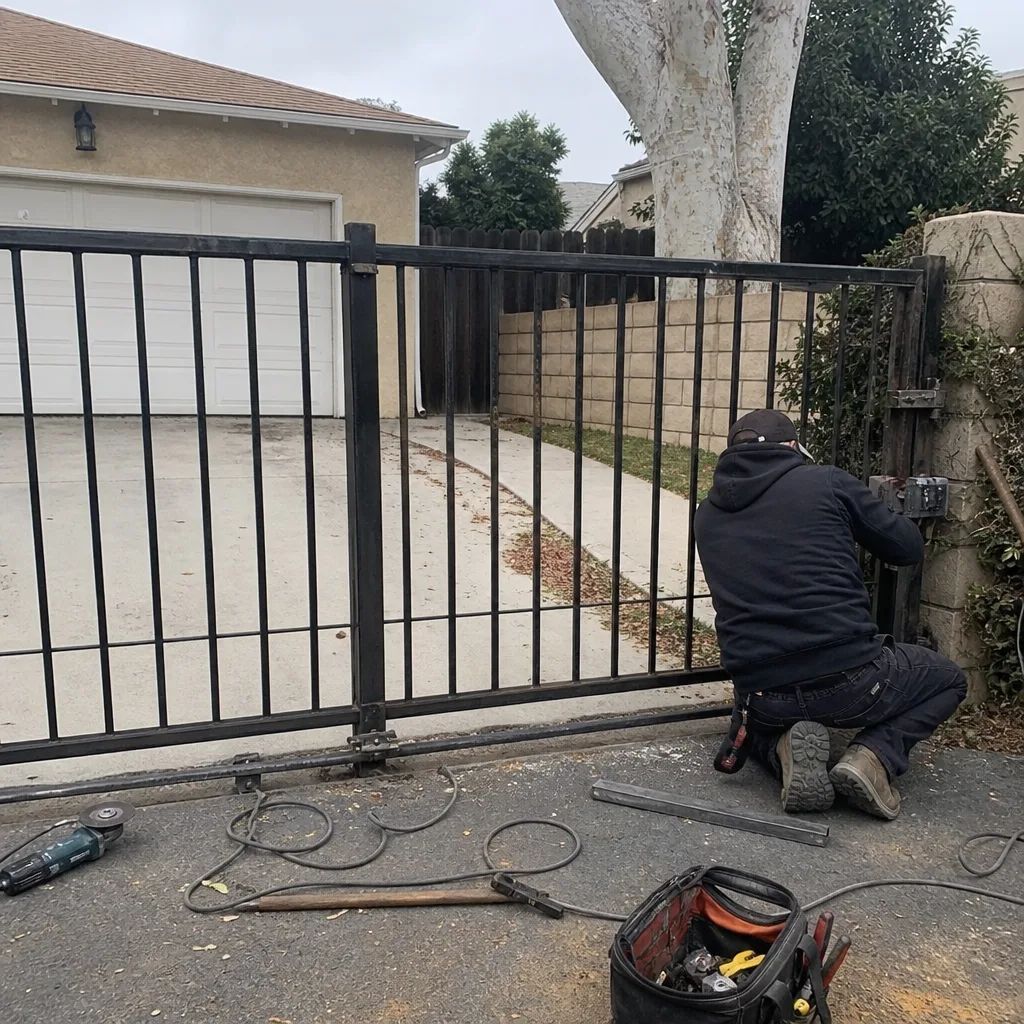 Before
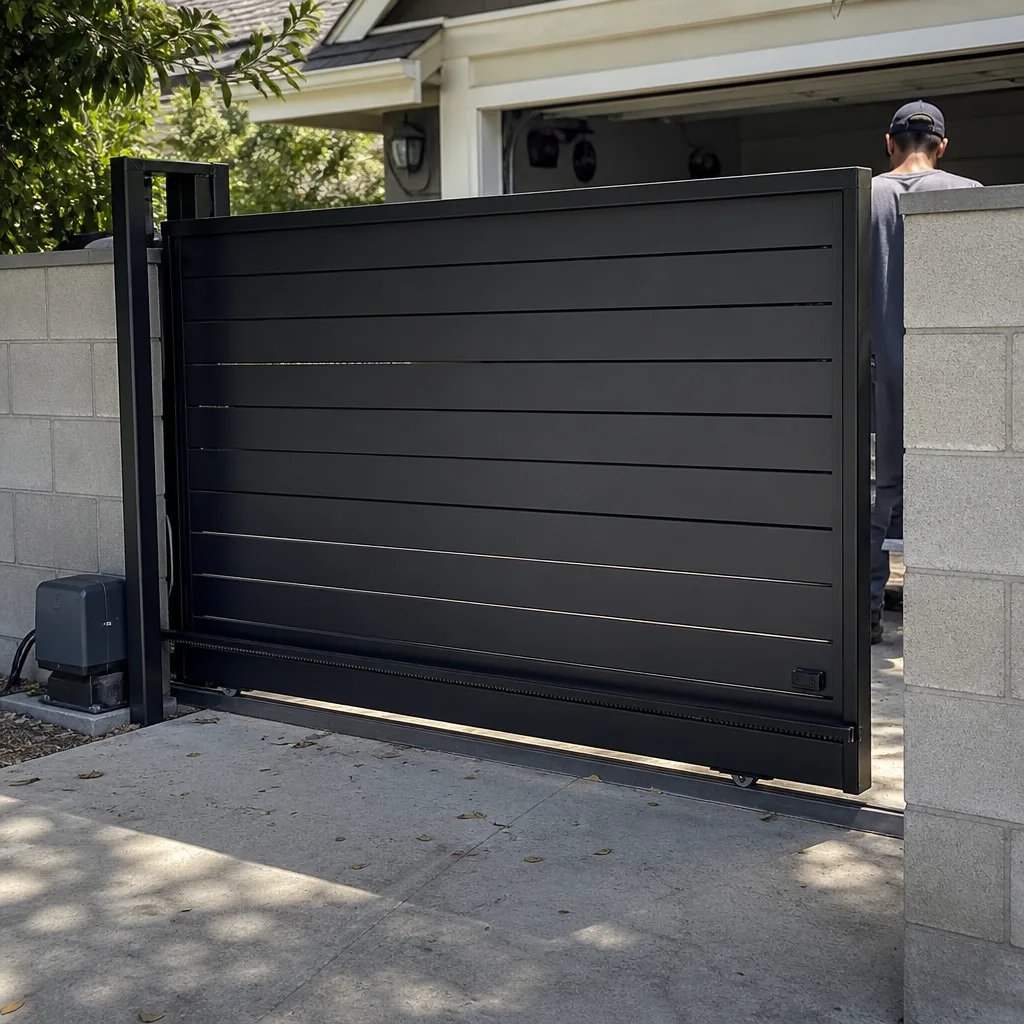 After
After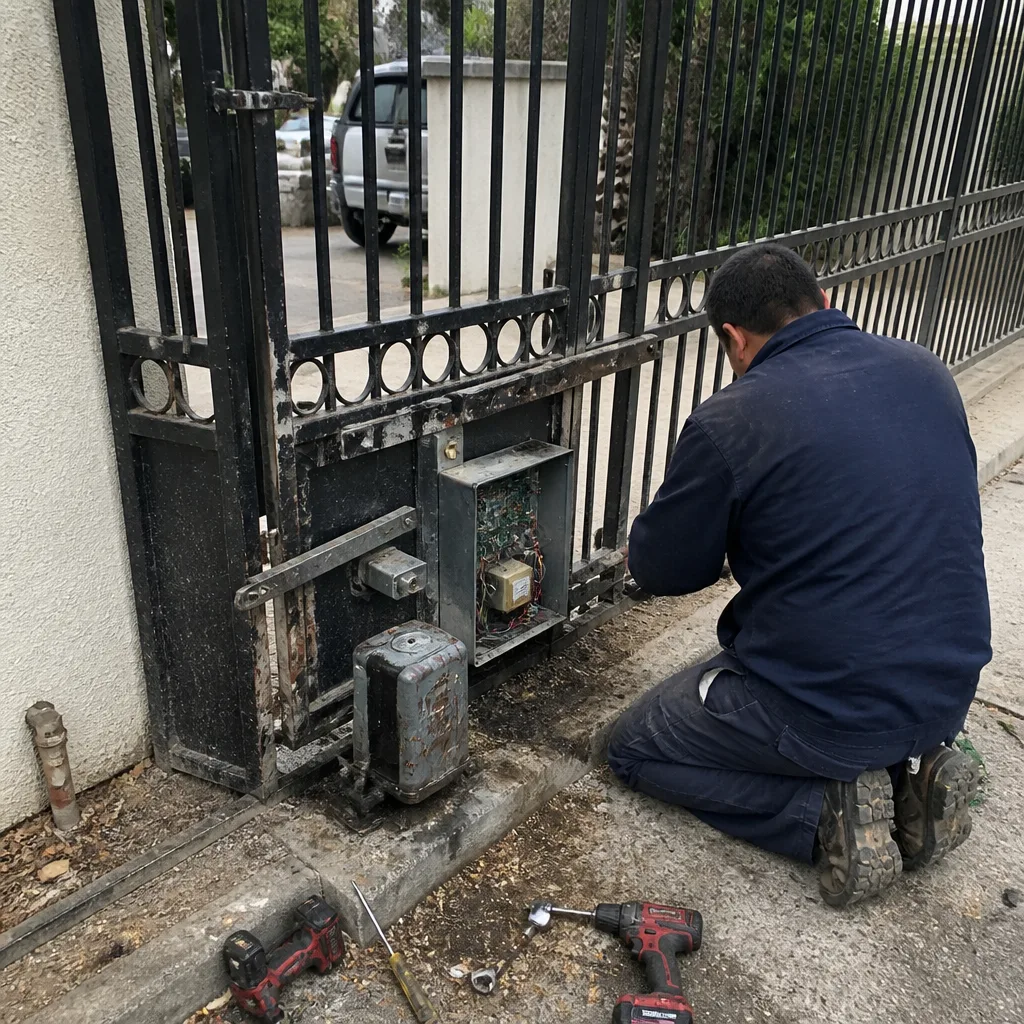 Before
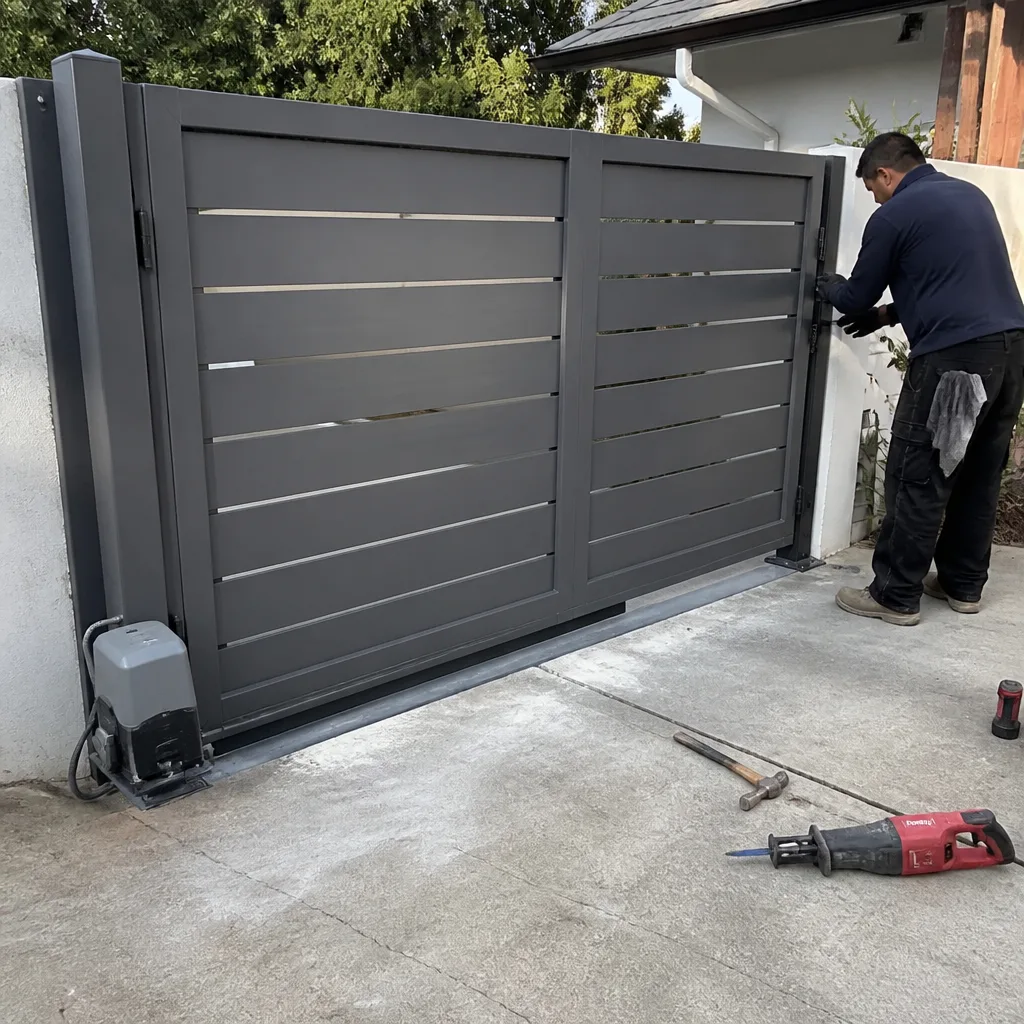 After
After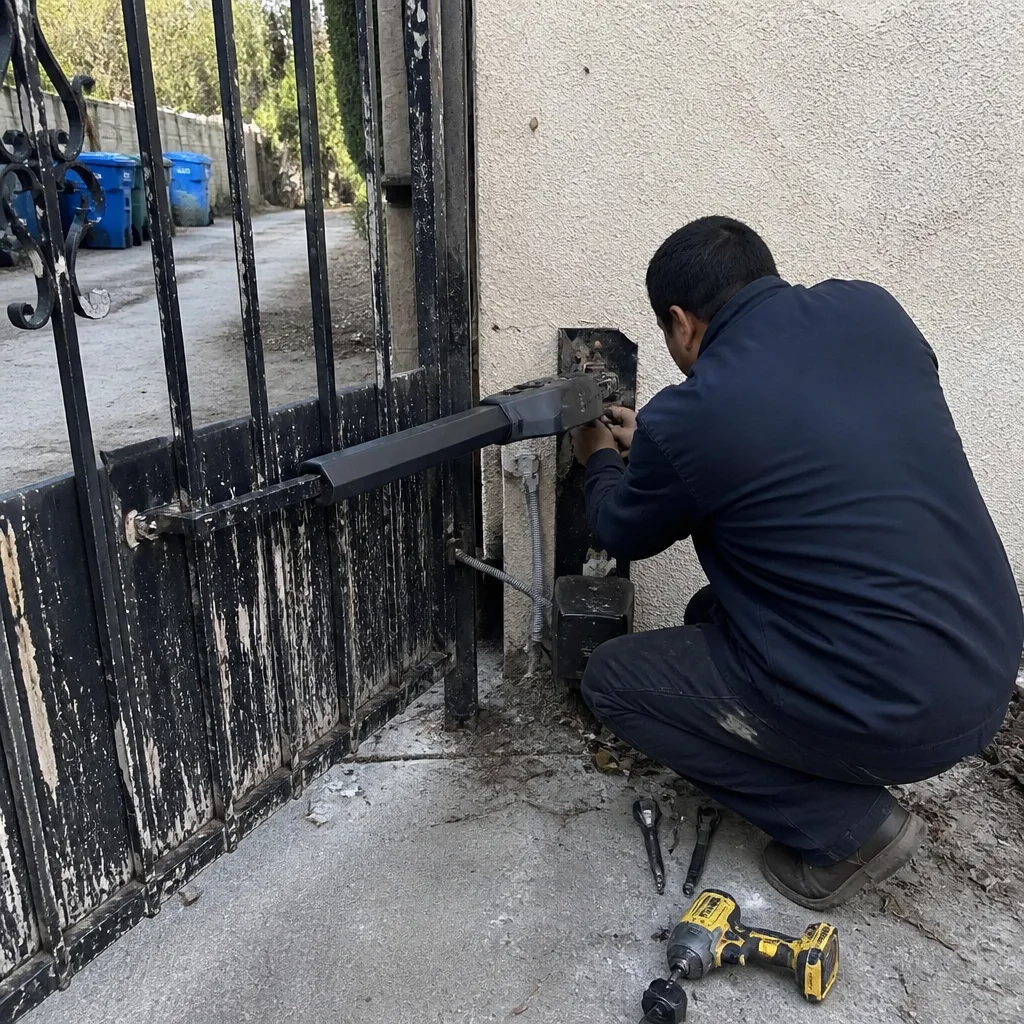 Before
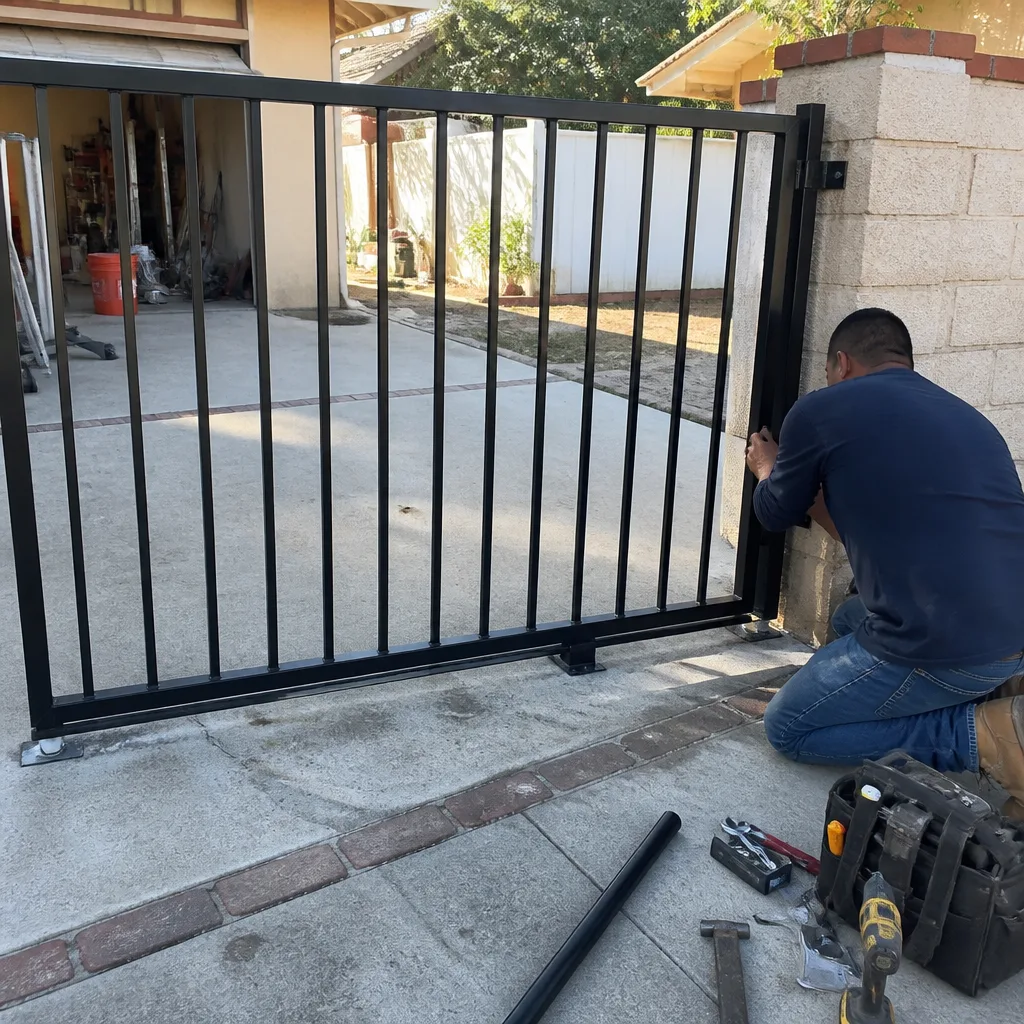 After
AfterGate Repair Warning Signs: A Granada Hills Homeowner’s Reference Guide
A gate that chirps or squeaks when it opens isn’t just annoying. In an automatic gate, that sound is usually metal-on-metal contact that will eventually score the rack gear to the point where the operator motor burns out trying to overcome the drag. Most Granada Hills homeowners don’t call until the gate has already failed, and by then a $60 hinge rebuild has become a $900 operator replacement. This guide walks you through every warning sign in plain terms, what’s actually causing it, how urgent the fix really is, and which problems you can watch for a while versus which ones need our Gate Repair services this week.
Quick Answer
Gate repair warning signs in Granada Hills fall into three categories: safety-critical faults (entrapment sensor failures, post lean toward the street, unexpected reversing), structural problems (sagging, weld cracks, rust at load points), and operator strain signals (grinding, slow response, chirping). Safety-critical issues need same-day attention. Structural problems need attention this month before a hinge post fails completely. Operator strain signals can often wait for a scheduled appointment but will cost more the longer you ignore them. Call (760) 361-6706 if you’re unsure which category yours falls into.
Table of Contents
- Grinding or Metal-on-Metal Noise
- A Gate That Sags or Drags
- Bouncing, Stuttering, or Jerky Movement
- A Gate That Reverses or Stops Unexpectedly
- Slow Response or Delayed Start
- A Gate That Won’t Latch or Stay Closed
- Rust and Weld Cracks: Cosmetic vs. Structural
- Urgency Tiers: Fix Today, Fix This Month, Monitor
Grinding or Metal-on-Metal Noise
When a sliding gate grinds, it’s almost always the rack gear and pinion gear fighting each other. The rack is the toothed steel strip bolted along the bottom of the gate panel. The pinion is the gear on the operator motor that drives it. When those teeth wear down or fill with dirt and debris, the two surfaces stop meshing cleanly and start chewing at each other. We see this constantly in Granada Hills driveways, especially after the Santa Ana winds blow grit into the rack channels. The sound gets worse, the motor works harder, and eventually the pinion gear strips entirely. At that point the gate won’t move at all.
For swing gates, grinding usually means a hinge bearing has failed and the gate leaf is now riding metal-on-metal inside the hinge barrel. The fix there is often a weld-in hinge rebuild done on site, not a replacement hinge from a catalog that doesn’t match the original geometry.
What to check:
- Is the noise rhythmic with gate movement, or constant? Rhythmic suggests gear or hinge damage. Constant could be the operator’s internal drive.
- Does the sound change when the gate is manually released? If the gate rolls freely by hand but grinds under power, the issue is in the operator, not the gate itself.
- Visible metal shavings or dust around the rack or hinges are a sign that grinding has already progressed past the nuisance stage.
Urgency: Schedule this month. Grinding is a wear multiplier. Every cycle makes the underlying damage worse, and the repair bill climbs with it. In our experience, a gate that grinds for six months usually needs both gear work and a new operator. A gate that grinds for two weeks usually needs only the gear work.
A Gate That Sags or Drags
A gate sags in the hinge post, not in the middle. That’s the single most misunderstood fact in gate repair, and it’s the first thing I explain to Granada Hills homeowners who point at a drooping gate leaf and assume the gate itself is bent. Gate panels are rigid. They don’t bow under their own weight the way people imagine. What actually happens is the hinge post, the vertical post anchored in concrete, starts to lean under years of cyclic loading. As the post leans, the gate leaf drops at the latch end and begins scraping the driveway or dragging on the track.
This matters because the fix is completely different depending on where the failure actually is. If you weld a new hinge onto a leaning post, you’ve bought six months. Fix the panel without the post and you’ll fix it twice.
What to look for:
- A gap between the post and the concrete footing that’s wider at the top than the bottom, or fresh hairline cracks in the concrete around the post base.
- Scrape marks on the driveway or track where the gate leaf now contacts ground.
- A latch that used to line up but now sits a half-inch or more below the strike plate.
- Visible lean when you sight down the post from the side, compared against a fence line or the house wall.
In Granada Hills, we see post lean accelerate after wet winters. The clay-heavy soil in the northern valley neighborhoods swells when it rains and contracts when it dries, and that cycle works a post back and forth in its footing. Homes in the Porter Ranch adjacent hillsides and the flats near Balboa have different soil behavior, but the failure pattern is the same: a post that was perfectly plumb when installed in 2004 is now fighting the soil every season.
Urgency: Fix this month. A sagging gate puts abnormal load on every other component, including hinges, operator, and latch. The longer it runs, the more components fail from the strain. The repair typically involves resetting and re-bedding the post, then re-hanging the gate with properly aligned hinges. It’s work we do on site, in the driveway, with the gate never leaving your property.
Bouncing, Stuttering, or Jerky Movement
A gate that bounces or stutters as it travels is telling you something about its wheels, its track, or its operator’s torque-sensing system. For sliding gates, the most common cause in Granada Hills is a flat spot on a nylon or steel wheel from sitting in one position, or debris buildup on the track that the gate hits at the same point in every cycle. The second most common cause is an operator that’s misadjusted and pulsing power instead of feeding it smoothly.
For swing gates, jerky movement often traces to a hinge that’s binding. The operator pushes, the hinge resists, the gate lurches forward, and the cycle repeats. It looks like an electrical problem. It’s usually mechanical.
Step-by-step diagnosis for a bouncing sliding gate:
- Watch the gate closely as it moves. Note where in the travel the bounce happens. Is it always at the same spot? That’s a track or wheel problem. Is it random? That’s more likely operator logic or power delivery.
- Run the gate in manual release if your operator has that feature. A gate that rolls smoothly by hand but bounces under power points to the operator or its settings.
- Check the track for pebbles, debris, or a bent section. Granada Hills driveways collect small rocks from surrounding hillside landscaping, and those rocks end up in the track more often than homeowners expect.
- Inspect the wheels for flat spots or worn bearings. Spin each wheel by hand with the gate in manual release.
Urgency: Monitor for a week. If the bouncing is consistent and predictable, book a service call. If it’s intermittent, try cleaning the track first. A bouncy gate is often a twenty-minute fix when caught early, and a multi-hundred-dollar operator replacement when ignored for a year.
A Gate That Reverses or Stops Unexpectedly
This is the warning sign that deserves the most respect, because it’s the one most likely to be safety-related. An automatic gate operator in Granada Hills is required to have entrapment protection, which typically means photo-eye sensors across the gate opening, edge sensors on the leading edge of the gate leaf, or both. When the operator detects an obstruction, it reverses or stops. If your gate is reversing when nothing is in the way, one of three things is happening: the safety sensor is dirty or misaligned, the sensor is failing and sending false obstruction signals, or the operator’s torque-sensing is set too sensitive and interpreting normal resistance as an obstruction.
Here’s what you need to understand about this particular failure: a gate that reverses unexpectedly is safer than a gate that should reverse and doesn’t. If you’re seeing nuisance reversals, the system is at least trying to protect you. The danger comes when people disable the safety features to stop the nuisance, which is something we unfortunately find on gates we’re called out to repair after another company gave up.
How to isolate the cause:
- Clean the photo-eye lenses with a dry cloth. Dust and spider webs trigger false obstructions, and Granada Hills has no shortage of either.
- Check that the photo eyes are aligned. A bump from a car or a kid’s bike can knock one slightly off axis.
- If the gate has edge sensors, run your hand along the leading edge and feel for breaks or cracking in the rubber profile. A damaged edge sensor can send a constant obstruction signal.
- Watch the gate during the reversal. Does it reverse at the same point every time? Same point suggests a track or wheel issue triggering torque-sense. Random point suggests sensor or wiring.
Urgency: Fix today if the reversals are random and frequent, because something in the safety system is failing and you don’t want to discover it by having the gate close on your car. If the reversals are rare and you can trace them to a specific spot, you can safely schedule within the week. Either way, do not disable safety sensors to force the gate to work. The gate is doing its job. Let a professional figure out why the signal is wrong.
Slow Response or Delayed Start
A gate that hesitates before it moves, or that moves more slowly than it did last year, is typically the operator motor working against increased mechanical resistance. The motor doesn’t slow down because it’s tired. It slows down because the gate is harder to move, and the motor is a fixed-output device being asked to do more work than it was sized for. In practice, that means something upstream of the motor has degraded: hinges are binding, wheels are dragging, the rack is misaligned, or the gate’s weight has increased due to a modification like a new solid panel or added decorative steel.
Less commonly, slow response traces to the operator’s capacitor or control board. A failing capacitor can’t deliver the starting torque the motor needs, so the motor starts weak and ramps up slowly. This is a known pattern with operators from BFT and Linear, which are common in Granada Hills installations. A failing capacitor is a repair, not a replacement of the whole operator, but it needs to be caught before the motor itself overheats from repeated low-voltage starts.
What to check:
- Time the gate from full closed to full open. If it’s slower than it was when installed, something has changed mechanically.
- Does the motor get hot to the touch after a few cycles? Heat is the clearest sign the motor is working too hard.
- Does the gate move faster in one direction than the other? That asymmetry often points to a specific hinge or track issue on one side.
Urgency: Schedule this month. A slow gate is a gate that’s accumulating wear on the operator, and operator replacement is the single most expensive common repair on an automatic gate. The earlier you address the mechanical resistance, the more likely the motor survives without damage. Ghost Controls and Viking operators respond well to early intervention. The pattern we see repeatedly in Granada Hills is that homeowners notice the slow response, adapt to it for six months, and then call when the motor finally gives out entirely.
A Gate That Won’t Latch or Stay Closed
Show me the gate closing on its own and I’ll show you where it’s failing. A gate that won’t stay latched has one of three root causes: the latch itself is worn or misaligned, the hinges have worn enough to drop the gate leaf below the strike plate, or the post has shifted. These require completely different fixes, and the wrong fix wastes your money.
Here’s how to tell them apart:
- Latch problem: The gate leaf sits level and the gap between gate and post looks even top to bottom, but the latch tongue won’t engage or pops out easily. This is a latch repair or replacement. In many cases the latch has simply worked loose from its mounting over years of use.
- Hinge problem: The gate leaf sits visibly lower on the latch side than the hinge side, and the hinges show play when you lift up on the gate. The hinge barrels are worn. This is a hinge rebuild, and it needs to happen before the worn hinges allow the gate to sag far enough to drag.
- Post problem: The gate leaf is level relative to its own post, but the post is leaning, so the latch no longer aligns with the strike. If you push the gate closed and the gap at the latch is wrong but the gate itself isn’t sagging, the post is the culprit.
If your gate is a pedestrian gate with a self-closing spring hinge and the gate won’t close at all, the spring tension has failed. That’s a hinge replacement rather than a latch issue. In Granada Hills, pedestrian gates on side yards take a lot of wind load during Santa Ana events, and that repeated slamming is hard on hinge springs.
Urgency: Fix today if the gate is a security gate and won’t stay closed. A gate that doesn’t latch is an open invitation, and in Granada Hills neighborhoods where gates secure pools, driveways, or side access, an unlatched gate is also a liability. If the gate latches but requires effort or wiggling, schedule this month.
Rust and Weld Cracks: Cosmetic vs. Structural
Not all rust is created equal, and understanding which rust matters can save you from replacing a gate that has years of life left, or worse, ignoring a gate that’s about to fail. Here’s the distinction we apply when we look at gates across Granada Hills: surface rust is cosmetic, structural rust is a time bomb, and the difference is almost always visible if you know what to look for.
Surface corrosion appears as a uniform orange-brown film or light pitting on flat surfaces. It’s common on ornamental gates that have been painted and re-painted over decades, especially where sprinklers have been hitting the bottom rail consistently. Granada Hills irrigation systems are notorious for this, with overspray hitting gate panels and creating rust lines that look worse than they are. Surface rust can be wire-brushed, primed, and painted. It’s a maintenance item, not a structural issue.
Structural rust appears differently. It concentrates at weld joints, hinge mounts, and the bottom rail where water pools inside the tube. It creates flaking or layering of the steel, visible cracking at the joint, and a dull thud instead of a clean ring when you tap the area with a wrench. Structural rust means the steel section has lost wall thickness. A gate panel that has lost significant wall thickness at a hinge mount can tear at the weld. That’s not a repair you want to discover by having the gate fall on the driveway.
Weld cracks follow a similar logic. Hairline cracks in the paint at a welded joint may be cosmetic paint crazing, but if you can see the crack through the steel itself, or if the crack opens slightly when someone leans on the gate, that’s a structural weld failure in progress. The fix is grinding out the old weld and re-welding, ideally on site. We weld gates in driveways across Granada Hills every week, and it’s almost always faster and cheaper than replacing the gate.
Urgency: Cosmetic rust is a monitor-and-address item. Plan for it at your next service or when you’re ready to repaint. Structural rust or weld cracks are fix-this-month items if the gate is still functioning, and fix-today items if the gate is a drive gate that supports an automatic opener. The operator adds load to every joint it cycles through.
Urgency Tiers: Fix Today, Fix This Month, Monitor
Every warning sign in this guide falls into one of three urgency tiers. Here’s the honest breakdown of what needs immediate attention, what can wait a few weeks, and what you should simply keep an eye on. This is the same triage I use when a Granada Hills neighbor calls and asks whether they need someone out today or if it can wait until I’m in the area; see also Seasonal Gate Repair Care for Granada Hills: Year-Round Homeowner’s Guide for maintenance timing.
Tier 1: Fix Today
- Safety sensor malfunction with random reversals or, worse, no reversal when the gate hits an obstruction
- A gate that won’t latch or stay closed when it functions as a security barrier or pool access point
- Post lean toward the street or driveway that’s visible to the naked eye, especially on a drive gate with an automatic operator
- Structural weld cracks at hinge mounts or operator attachment points
These are the conditions that can injure someone, cause property damage, or fail catastrophically without much additional warning. A drive gate with a failing hinge weld can drop thousands of pounds onto a car or a person. A safety-sensor fault is one failed cycle away from being a liability.
Tier 2: Fix This Month
- Grinding or metal-on-metal noise that’s consistent and repeatable
- Sagging gate that’s scraping or dragging, even slightly
- Slow response or delayed start that’s getting worse
- Structural rust at load-bearing sections
These conditions aren’t immediately dangerous in most cases, but they’re actively getting more expensive to fix. Every operating cycle wears something further. A grinding gear that’s a $200 repair today can become a $900 operator replacement in six months.
Tier 3: Monitor and Address at Next Service
- Surface rust with no flaking or cracking
- Occasional, predictable stutter at a specific track point
- Hairline paint crazing at welds with no visible steel cracks
- Minor latch adjustment needed but the gate still closes securely by hand
These are the items you note and address when the gate is being serviced anyway. They don’t justify an emergency call, but they also shouldn’t be ignored indefinitely. A little surface rust has a way of becoming structural rust if it’s never addressed.
Common Mistakes to Avoid
- Greasing the rack gear to quiet a grinding sound. Grease quiets the noise briefly and then collects grit, which accelerates the wear. The rack and pinion are designed to run dry or with a specific dry lubricant. The grinding is telling you about misalignment or wear, not a lack of lubrication.
- Tightening the hinge bolts to fix a sagging gate. Hinge bolts usually aren’t the problem. The post is. Crank the bolts and you may crack the post or strip the threads, and the gate will still sag.
- Disabling safety sensors to stop nuisance reversals. This turns a nuisance into a hazard. The sensor is doing its job by detecting something, even if that something is a dirty lens or a misaligned beam. Fix the sensor, don’t bypass it.
- Replacing the gate panel instead of the post. The panel is usually the strongest part of the assembly. When a gate sags, drops, or binds, the post and hinges are the usual suspects. A new panel on a bad post sags just as fast as the old one.
- Ignoring slow operation because the gate still opens. Slow operation is the clearest early warning of motor strain. Gate motors in Granada Hills work hard in the summer heat, and a motor that’s already straining will fail sooner when temperatures climb.
- Spray-painting over structural rust. Paint covers the symptom and hides the progression. If the rust is flaking or cracking, the steel underneath needs assessment and possibly repair before any coating goes on. We’ve seen gates that looked fine from ten feet away and were paper-thin at the hinge mount underneath a fresh coat of paint.
When to Call a Professional
Call a gate professional when the warning sign involves the operator, the safety system, a leaning post, or any weld crack you can see in the steel. These aren’t do-it-yourself repairs, and the consequences of getting them wrong range from a gate that fails again in weeks to a gate that drops on someone. In Granada Hills, you also want someone who understands the local conditions: the clay soil that shifts posts, the Santa Ana winds that slam unlatched gates, and the summer heat that pushes gate motors to their limits.
Gatewood Fence & Gate offers free estimates in Granada Hills. If you’re seeing any of the warning signs in this guide and you’re not sure whether it’s urgent, explore more guides & resources or call (760) 361-6706. A live person answers around the clock, and if it’s not urgent, we’ll tell you that honestly.
Frequently Asked Questions
Safety sensor faults, a gate that won’t latch when it secures a pool or driveway, visible post lean on an automatic gate, and structural weld cracks are all urgent. Anything involving the operator, safety system, or structural integrity of the gate assembly should be checked by a professional before the gate cycles again if possible. Grinding, sagging without lean, and slow operation are important but can typically wait a few weeks for a scheduled appointment.
Gate repair costs in Granada Hills vary widely by what’s actually wrong. A hinge rebuild might run a few hundred dollars while an operator replacement can exceed $1,000. The honest answer is that you can’t know the cost until someone looks at the specific failure, which is why we offer free estimates and quote every price before any work begins. Call (760) 361-6706 and we’ll come take a look.
For urgent safety and security issues, yes. If your gate won’t latch, your safety sensors are malfunctioning, or a weld has cracked, we make those a same-day priority for Granada Hills homeowners. Less urgent repairs like hinge rebuilds, operator diagnostics, and rust mitigation can usually be scheduled within the week.
Fifteen years is middle-aged for a well-built steel gate, especially in Granada Hills where the dry climate is kind to steel. The gate itself often has decades of life left. What wears out are the moving parts: hinges, wheels, operator, safety sensors, and the latch. Repair-first is almost always the better value, and we’d rather rebuild a hinge or re-weld a joint than replace a gate that just needs the right repair.
We service and repair operators from LiftMaster, FAAC, BFT, Linear, Viking, Ghost Controls, DoorKing, Elite, and Mighty Mule. If your Granada Hills home has an automatic gate, chances are we work on the operator that drives it. We also handle hybrids where the operator is from one brand and the safety system is from another.
Yes. We serve the entire Granada Hills area, including the hillside neighborhoods along Balboa and the flatter sections near the northern valley, plus the adjacent communities. There’s no trip charge inside the county, and estimates are free. Call (760) 361-6706 and we’ll schedule at a time that works for you.
The Bottom Line
Gates fail slowly before they fail suddenly, and the warnings are almost always there: a grind, a sag, a stutter, a reversal, a slow start. The homeowners who catch these signals early spend a few hundred dollars on a targeted repair. The ones who don’t spend a thousand or more on an operator replacement or a full gate rebuild, and usually at the worst possible time. If you have an automatic gate in Granada Hills, learn to read the signs in this guide, act on the urgent ones the same day, and keep a local gate specialist’s number where you can find it. Hal Gatewood and Gatewood Fence & Gate home have been serving Granada Hills since 2001, and we’re always glad to take the call.
Written by Hal Gatewood, Owner at Gatewood Fence & Gate, serving Granada Hills since 2001.