
Last updated August 26, 2026
Free on-site gate assessment - hinges, posts, and your LiftMaster or Nice gate operator checked before anything is quoted
The assessment is free and the quote is the invoice.
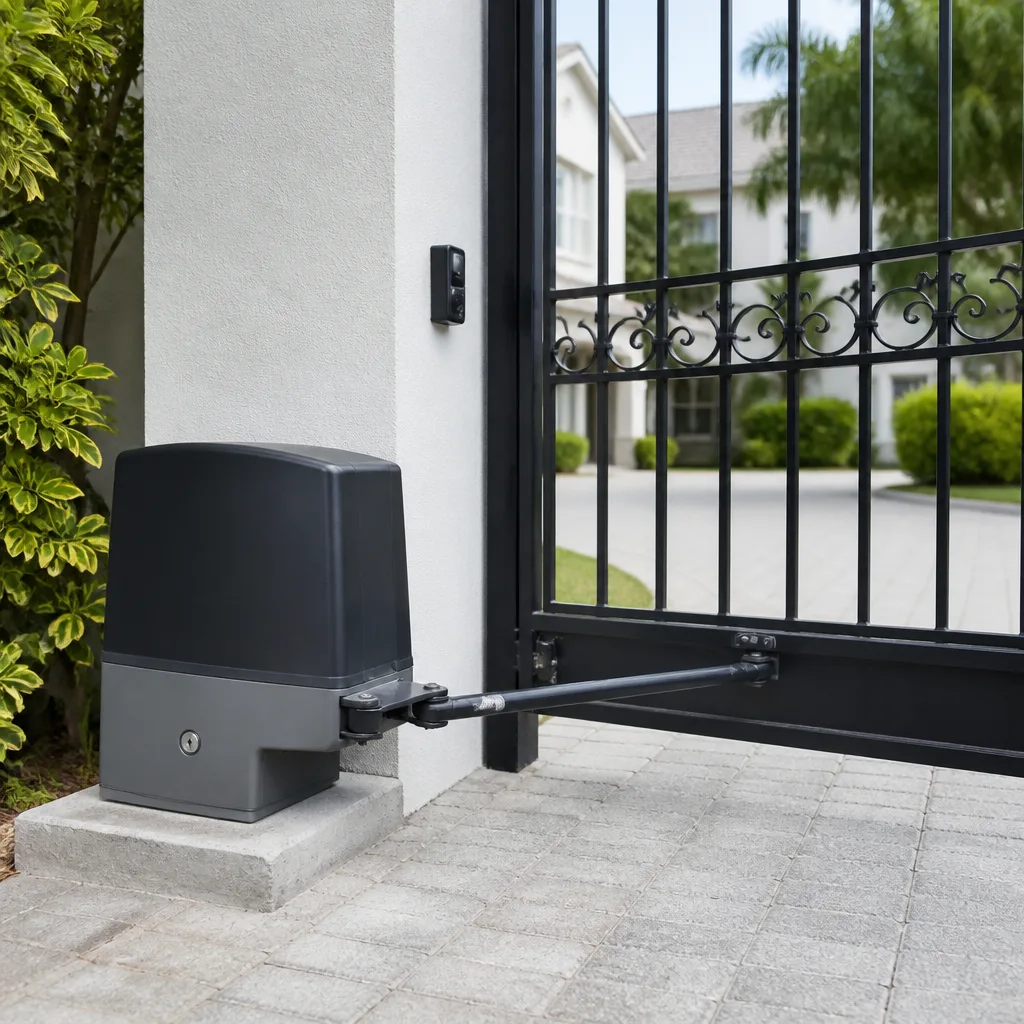
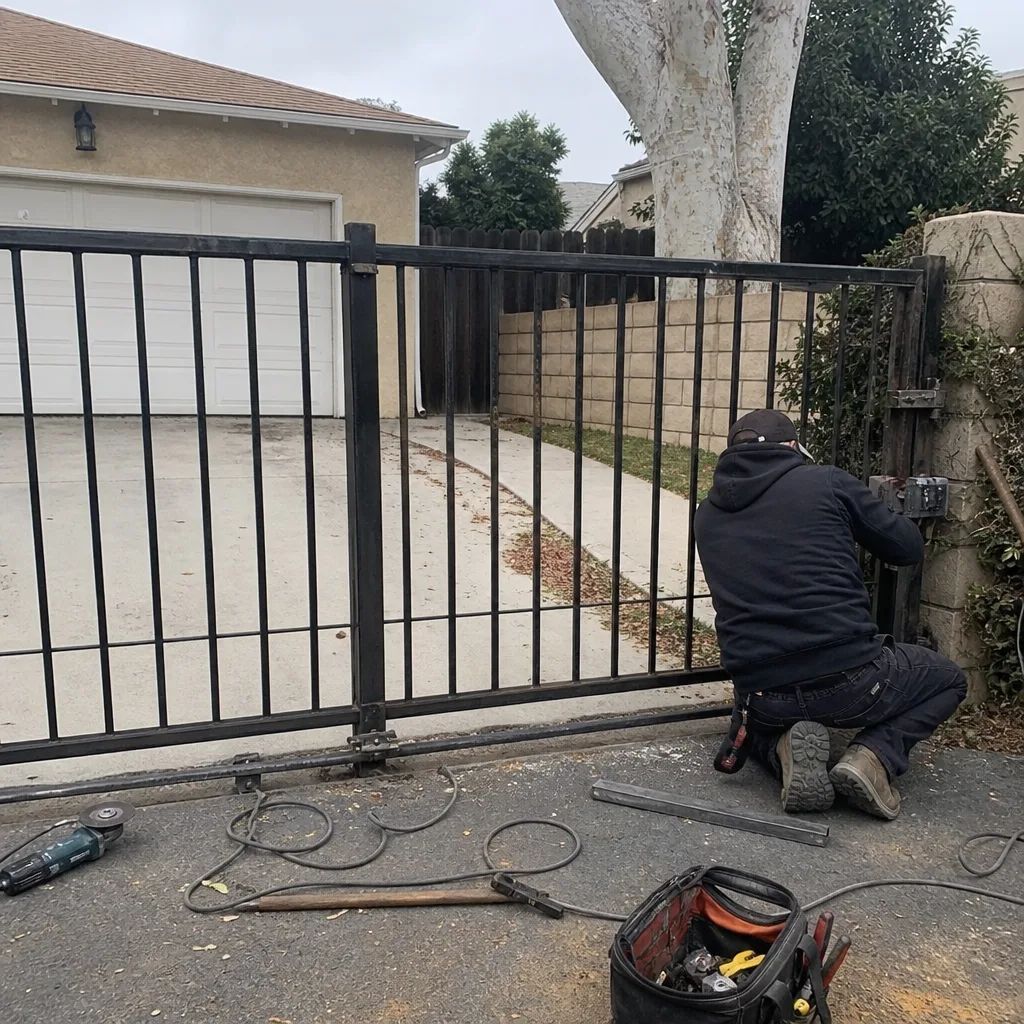 Before
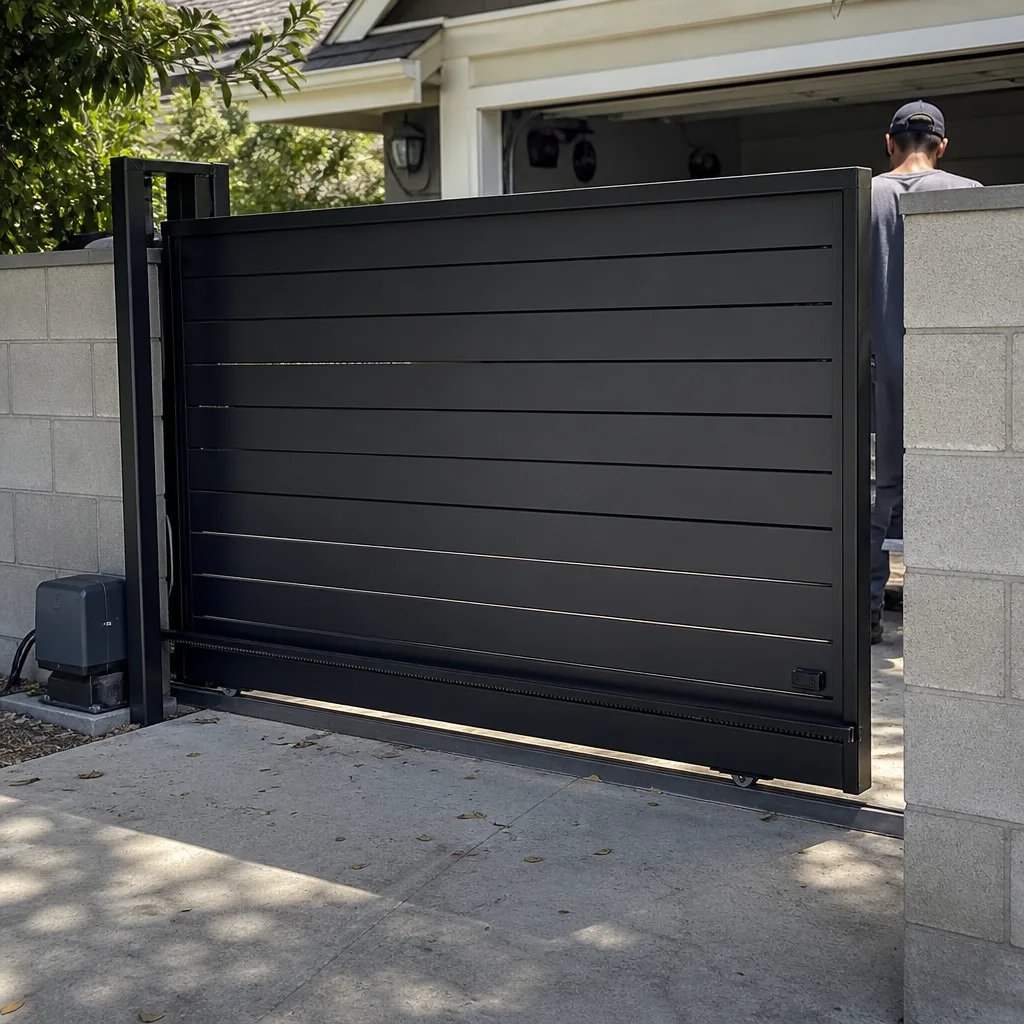 After
After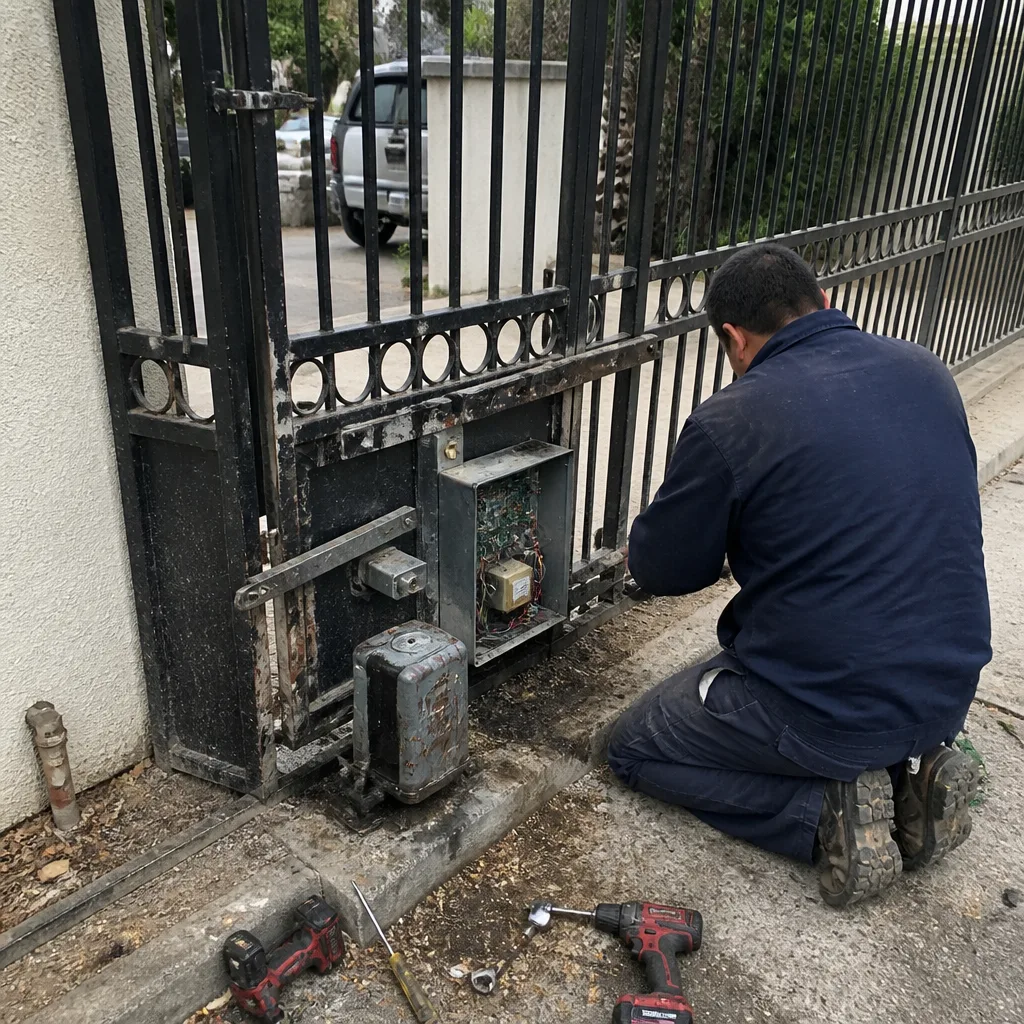 Before
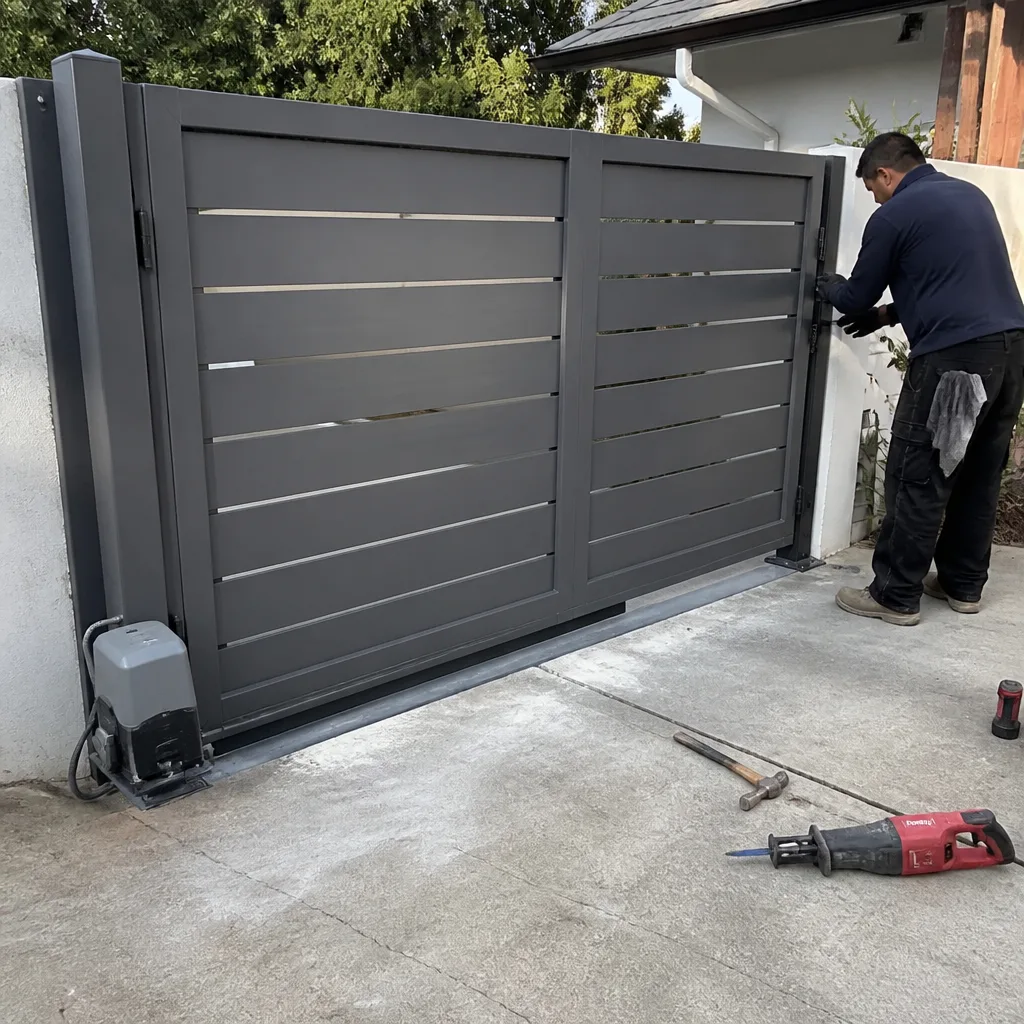 After
After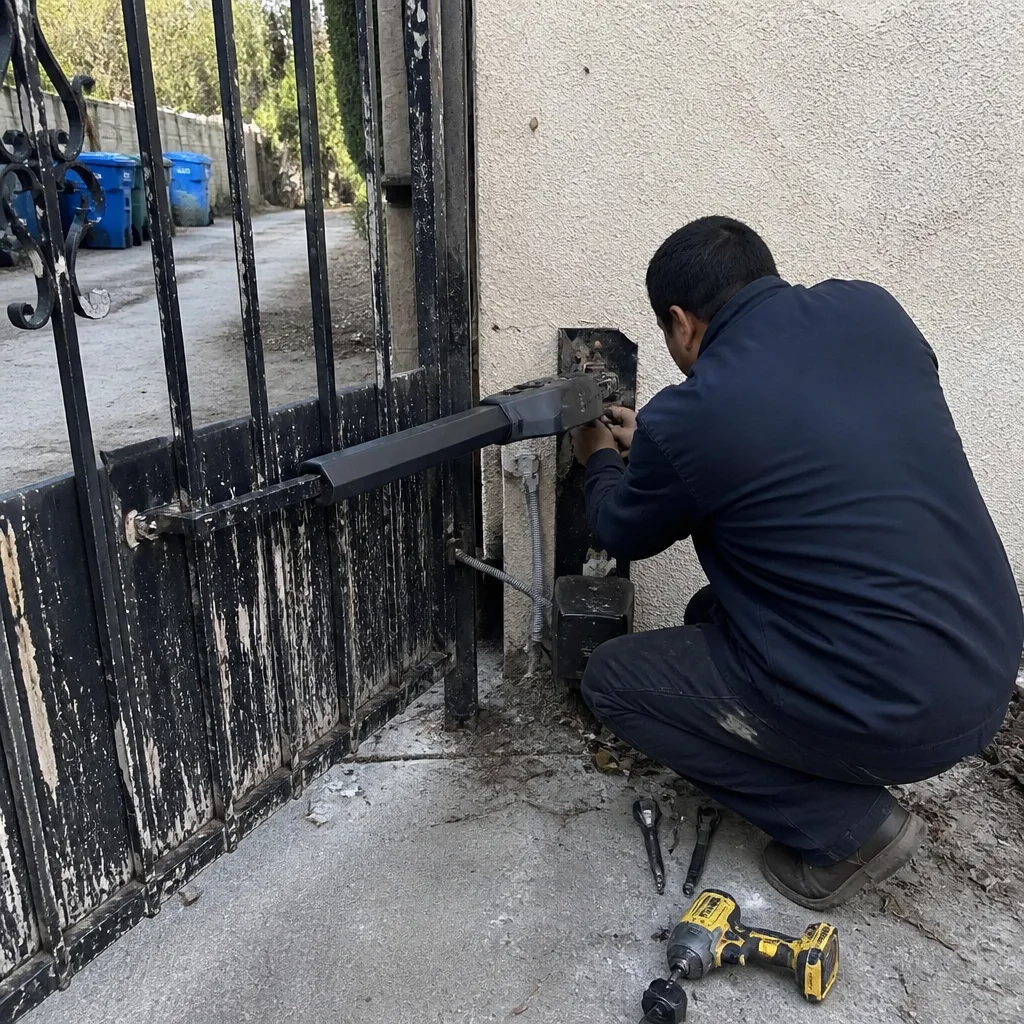 Before
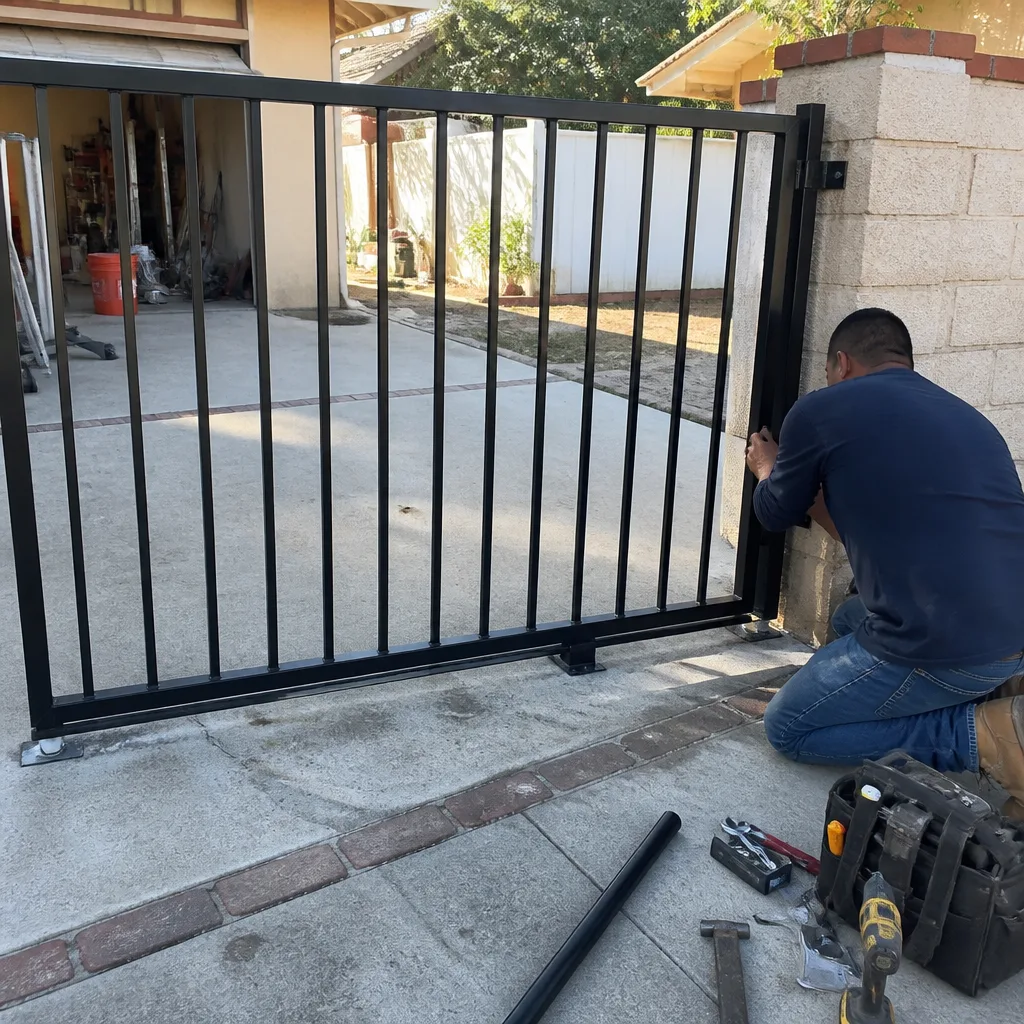 After
AfterGate Repair Permits, Codes & Inspections in CA: What You Need to Know
Most gate repair work in California never needs a permit, but the moment a homeowner hears the word “operator” or “post,” confusion sets in. We’ve watched people in Granada Hills pull permits for hinge replacements that code never required, and we’ve also been called to fix unpermitted operator installations that failed a home inspection twenty minutes before closing. The real line between maintenance and construction is narrower than the permit office makes it sound, and that line is drawn by Los Angeles County code, not by what a contractor tells you over the phone. This guide, along with our Gate Repair Warning Signs: A Granada Hills Homeowner’s Reference Guide, lays out where that line actually sits, what it means for your property value, and how to handle the paperwork without paying someone to hold your hand.
Quick Answer
In Los Angeles County, routine our Gate Repair services such as hinge replacement, panel straightening, weld repair, and replacing an existing operator with a comparable model does not require a permit. A permit is generally required when you install a brand-new gate and posts, pour new footings, run new electrical to the gate, or change the gate’s footprint or swing direction. The threshold in county code is whether the work is maintenance or an alteration, and most repairs land on the maintenance side.
Table of Contents
- Where LA County Draws the Line: Maintenance vs. Alteration
- Granada Hills vs. Unincorporated County: Why Your Zip Code Matters
- What an Inspector Actually Looks At During a Gate Operator Inspection
- The Risk Calculation: What Really Happens With Unpermitted Gate Work
- How to Pull a Simple LA County Residential Permit Yourself
- Entrapment Protection and UL 325: The Code Most Homeowners Never Hear About
- What the Resale Disclosure Actually Asks About Gate Work
- Common Mistakes to Avoid
- When to Call a Professional
- Frequently Asked Questions
- The Bottom Line
Where LA County Draws the Line: Maintenance vs. Alteration
Los Angeles County Building Code Section 105.1 says a permit is required for any construction, alteration, enlargement, repair, or improvement to a building or structure. Most homeowners read “repair” in that sentence and assume every repair needs a permit. But county code exempts ordinary maintenance, and that exemption is where gate work resolves almost every time.
The practical rule that guides inspectors across LA County, including in the San Fernando Valley communities around Granada Hills, is this: if you are restoring a gate to its original condition and function, you are doing maintenance. If you are changing the gate’s size, location, structural support, or adding electrical where none existed, you are doing an alteration.
Here is the breakdown that actually matters for residential gates:
- No permit required: Hinge replacement, latch repair, welding a cracked panel back together, replacing a bent wheel on a sliding gate, straightening a post that has shifted but not failed, replacing an operator with a like-for-like model using existing wiring, replacing photocells or safety edges with equivalent devices, painting and surface rust treatment.
- Permit required: Installing a new gate that did not previously exist, setting new posts in fresh concrete footings, adding a vehicular gate where a pedestrian gate stood, adding electrical power to a gate that never had it, changing a swing gate to a slide gate or vice versa, extending the gate opening wider than the original rough opening, and in most cases, installing a new foundation for an operator post.
- Gray zone: Replacing a rotted gate post. If you pull the old post, pour a new footing in the same footprint, and reset, county inspectors generally treat it as maintenance because the structure returns to its original condition. If you enlarge the footing or move the post, it becomes an alteration. We see this in Granada Hills regularly with older wooden gates where the post has rotted at grade.
The threshold language in the code is “alteration” versus “ordinary repair.” Ordinary repair is defined in the California Residential Code as work that does not change the structure, does not add square footage, and does not change the use. A gate is a structure for code purposes, but it is an accessory structure, and the bar for alteration on an accessory structure is lower than the bar for work on your house.
What this means in practice: a homeowner in Granada Hills who replaces a broken spring on a swinging driveway gate does not need a permit. The same homeowner who decides to widen that driveway gate from ten feet to fourteen feet absolutely does. The difference is not the gate. It is the change to the structure’s dimensions and the new footings that come with it.
Granada Hills vs. Unincorporated County: Why Your Zip Code Matters
Granada Hills sits inside the City of Los Angeles, which means residents there follow the Los Angeles Department of Building and Safety, usually called LADBS. But here is the part that confuses people: the 91344 zip code also includes pockets of unincorporated Los Angeles County that fall under the county’s Department of Public Works Building and Safety Division. The rules are similar, but the counter you visit and the forms you fill out are not the same.
If you live within Granada Hills city limits and need a permit for new gate installation, you go through LADBS, either online through their e-permit system or at the Van Nuys office on Sylvan Street. If you live in an unincorporated pocket, you go through LA County’s Building and Safety, most likely at the Santa Clarita Valley District office or the East LA main office, depending on your address.
The important thing to know is that both agencies enforce the same California Residential Code and the same LA County amendments, but the city of LA adds its own local amendments through the LA Municipal Code. For gate work, the differences are minor, mostly around plan review requirements for custom iron gates and the specific electrical inspection workflow.
Here is the practical difference we tell homeowners in Granada Hills:
- City of LA (LADBS): Simple residential gate permits are often processed through express permit, which means no plan review for standard installations. You fill out the form, pay the fee, and the permit is issued on the spot. Inspections are scheduled by phone or online, and the inspector comes from the Van Nuys office. Most gate permits are finaled the same day as the inspection.
- Unincorporated county: LA County Building and Safety requires more documentation for new gate installations, including a site plan sketch showing the gate’s location relative to property lines and the house. The county is stricter about setback verification. Processing takes a bit longer, and inspections are scheduled through a central line.
- HOA overlays: Many Granada Hills neighborhoods have HOAs, and HOAs in California can require design review approval for gate changes regardless of whether the city or county requires a permit. We have seen HOAs that require approval for gate color changes, which is well beyond code. That is a separate compliance layer, and it applies even when the building department says no permit is needed.
When in doubt, call the building department and ask. Both LADBS and LA County Building and Safety answer their counter phones, and both will tell you whether your specific project needs a permit before you spend a dime on the application.
What an Inspector Actually Looks At During a Gate Operator Inspection
If you do require a permit for gate operator work, either because you are adding power to a gate that never had it or installing a brand-new gate with an operator, the inspection is about one thing above all else: entrapment protection. The inspector is not going to evaluate the aesthetics of your gate, the quality of your welds, or the brand of operator you chose. They are checking whether the operator meets the current UL 325 standard and whether the entrapment protection devices are installed, wired, and functioning.
Here is what the inspection covers, in the order a typical Los Angeles County or LADBS inspector walks through it:
- UL 325 compliance: The operator must carry a UL 325 listing. The inspector will look for the label on the operator itself. If you installed an operator without a UL listing, the inspection stops right there, and you are pulling the unit out.
- Inherent entrapment sensor: The operator must have a working internal obstruction sensor. The inspector will block the gate with a test object, usually a 2×4 or similar resistance, and verify the gate reverses.
- External entrapment protection: For most residential gates, the inspector requires at least one external monitoring device, which means photocells or a safety edge, depending on the gate type. Photocells are positioned to detect a person or vehicle in the gate’s path. The inspector will break the beam and verify the gate either stops or reverses.
- Warning signage: Two warning signs are required on every automatic gate: one on each side of the gate, visible to anyone approaching. The inspector checks for the signs and their placement.
- Manual release operation: The operator must have a working manual release that lets you open the gate by hand in a power failure. The inspector will test it.
- Electrical grounding and bonding: The operator must be properly grounded, and the inspector checks the circuit. If the power run is new, they verify the conduit, wiring gauge, and a GFCI-protected circuit where code requires it.
We’ve been through dozens of these inspections in Granada Hills and the surrounding valley, and the items that fail most often are the external entrapment protection and the warning signs. Homeowners and handymen install an operator with no photocells, or they install photocells but wire them incorrectly, or they forget the signs entirely. The inspector is not being difficult. Those items are the difference between a gate that stops for a kid on a bike and a gate that doesn’t.
If you are replacing an existing operator with a new one from a brand like LiftMaster, Linear, or Viking, and you are using the same mounting, same wiring, and adding the required entrapment protection, the inspection is usually a fifteen-minute appointment. The inspector confirms the listing, tests the reverse, checks the photocells, and signs off. We’ve never had a like-for-like operator replacement fail inspection when it was installed correctly.
The Risk Calculation: What Really Happens With Unpermitted Gate Work
Let’s be straight about the risk, because the way contractors describe it is almost always wrong. Unpermitted gate work is not a criminal matter. No one from the county is driving around Granada Hills looking for gates that were installed without a permit. The building department has no enforcement team scanning neighborhoods for unpermitted accessory structures. The risk shows up in exactly three places: resale, insurance claims, and homeowner complaints.
The resale scenario is the one that matters most, and it deserves an honest explanation. When you sell a home in California, you complete a Transfer Disclosure Statement. That document asks about work done on the property and whether permits were obtained. If you installed a gate with an operator and did not pull a permit, and you disclose that, the buyer can ask you to fix it before closing, which usually means pulling the permit retroactively and correcting whatever doesn’t pass inspection. If you do not disclose it, and the buyer’s inspector catches the unpermitted work, you are in a worse position, and so is the buyer’s agent.
Here is what actually happens when unpermitted gate work is discovered during an escrow, based on what we have seen in Granada Hills and nearby communities:
- The buyer’s home inspector flags it. Most home inspectors doing business in Los Angeles County know code well enough to spot a gate operator that was added without a permit. They look at the electrical, the lack of a permit record, and they write it up.
- The buyer requests a credit or correction. More often than not, the buyer asks for a retroactive permit, or they ask for the operator to be removed, or they ask for a dollar credit. The retroactive permit path means an inspector comes out, sees the installation, and if it does not meet current UL 325 and entrapment protection requirements, it has to be corrected. We have seen operators from Ghost Controls that were perfectly fine functionally get pulled because they were missing the required external entrapment protection and the seller did not want to retrofit.
- The cost is usually manageable. Correcting entrapment protection on an existing gate operator is typically a few hundred dollars. The bigger cost is when the operator itself is not UL listed or the electrical run was done incorrectly, because then you are rewiring or replacing the operator. That can push into the low four figures.
- Nothing falls down. A gate is not a load-bearing wall. The structural risk of unpermitted gate work is low compared to unpermitted room additions or unpermitted foundation work. The risk is paper risk and electrical safety risk, not catastrophic structural risk.
The honest advice: if you are installing a new gate with new power, pull the permit. It costs a few hundred dollars and removes the resale variable completely. If you are repairing a gate, replacing hinges, welding a crack, or swapping a burned-out operator for a new one with existing wiring, you can rest easy. That work is maintenance, and no permit office in Los Angeles County expects you to file for it.
How to Pull a Simple LA County Residential Permit Yourself
You do not need a permit expediter for a residential gate permit. We have walked through this process enough times to say that with confidence. The application is short, the counter people are helpful, and the fee for a simple gate permit is a fraction of what a consultant charges just to shuffle the paper. If you can read your property’s parcel number off your tax bill, you can pull your own gate permit.
Here is the step-by-step process for a new gate installation permit in the City of LA, which covers most Granada Hills addresses:
- Gather your property information. You will need the Assessor’s Identification Number, also called the AIN, which is on your property tax statement or available through the LA County Assessor’s parcel lookup. You will also need the legal description or just the street address in most cases.
- Prepare a simple site plan. This does not need to be an architect’s drawing. A hand sketch on 8.5×11 paper is accepted for a standalone gate permit. Show the property lines, the house, the driveway, the gate’s location, the gate’s width, the direction it swings or slides, and the setback from the street. Mark the proposed operator location if you are adding one.
- Determine the gate’s specifications. The application asks for gate height, width, material, and whether it is motorized. For a motorized gate, note the operator brand and model. Brands like DoorKing and Linear are commonly seen on applications in the valley.
- File through LADBS e-permit online or visit the Van Nuys office. The Van Nuys Development Services Center at 6262 Van Nuys Boulevard handles walk-in permit applications for the west valley, including Granada Hills. Bring your site plan, your property info, and a form of payment. Express permit processing is available for simple residential gates, which means same-day issuance.
- Pay the fee. Fees vary based on the project valuation, which you declare on the application. For a single residential driveway gate with an operator, the valuation is typically between $3,000 and $8,000, and the permit fee lands in the low hundreds depending on the current fee schedule.
- Schedule your inspection after installation. Once the gate and operator are installed, call or use the online system to request an inspection. As explained above, the inspector checks UL 325 compliance, entrapment protection, warning signs, manual release, and electrical grounding. If everything is right, the inspection is finaled the same visit.
If your Granada Hills address falls in an unincorporated county pocket, the process is similar but goes through LA County Building and Safety, and you may need to visit the Santa Clarita District office or submit through the county’s EPIC-LA online portal. The county is going to ask for more detail in the site plan and may take a few business days to process. Call ahead and ask which office handles your specific parcel.
One note we always give homeowners: if the gate project includes a new power run from the house to the gate, the electrical portion of the permit is part of the same application, but the inspector will want the trench visible during the rough inspection if the conduit is underground. Do not bury the trench before the inspection. That single mistake costs more delays in Granada Hills than any other part of the process.
Entrapment Protection and UL 325: The Code Most Homeowners Never Hear About
The code that governs automatic gate operators more than any other is UL 325, which is a safety standard adopted into the California Electrical Code. UL 325 was written in response to incidents where automatic gates injured or killed people, mostly children, because the gate did not reverse when it encountered a person. That is not alarmist language. The standard exists because the incidents happened, and the standard has been updated repeatedly since the early 2000s to close gaps in detection.
What UL 325 means for a homeowner in practical terms is this: every automatic gate operator sold in the United States must be UL 325 listed, and the listing requires a set of safety devices that differ by gate type and application. The standard classifies gate operators by use class, and residential driveway gates fall under Class I, which is the least restrictive. But even Class I operators require external entrapment protection in almost all installations.
The key requirements for a residential gate operator under current UL 325 and California code:
- Inherent entrapment protection: The operator must have a built-in sensor that detects resistance and reverses the gate. This is a function of the operator itself, not an optional accessory.
- External entrapment protection: At least one external device is required, which means either a non-contact sensor like a photocell or a contact sensor like a safety edge. For swing gates, the vulnerable points are the hinge area and the leading edge. For slide gates, the vulnerable points are the leading edge and any point where the gate passes near a fixed object.
- Warning signage: The gate must display warning signs on both sides, visible to anyone who approaches. These signs are provided with every new operator from manufacturers like Viking and DoorKing, and they must be installed, not left in the box.
- Manual release: A way to open the gate by hand when the power is out, accessible from both sides in most configurations.
We install and service operators from nine major brands including LiftMaster, FAAC, BFT, Linear, Viking, Ghost Controls, DoorKing, Elite, and Mighty Mule, and every single one of them ships with a UL 325 compliance sheet that explains exactly what external protection devices are required for the installation type. The homeowner who installs an operator from Ghost Controls themselves and skips the photocells is not saving money. They are creating exactly the condition the standard exists to prevent, and if an incident happens, the liability is on them.
The update cycle matters too. The UL 325 standard has been revised multiple times, and operators manufactured before certain revisions do not meet current requirements. If you are buying a used operator or an old-stock unit, verify its UL listing date. An operator that was listed in 2004 may not meet the current standard, and an inspector in Los Angeles County will not sign off on it.
What the Resale Disclosure Actually Asks About Gate Work
The California Transfer Disclosure Statement, the TDS, is the form every seller completes before a residential sale closes. It asks specific questions about the property, and two of those questions are where gate work shows up: one about additions and alterations, and one about permits. The exact wording varies by the version of the form, but the substance is consistent: did you do any work that required a permit, and was that permit obtained?
Here is the practical read on how gate work lands in disclosure:
- Routine gate repair is not a disclosure issue. Replacing hinges, welding a crack, installing a new latch, swapping an operator for a like-for-like model: none of that is an alteration in the code sense, none of it required a permit, and none of it belongs in the TDS as a disclosure item. A seller who discloses routine gate repair is over-disclosing, which is legal but unnecessary.
- New gate installation with an operator is a disclosure item. If you installed a new gate, added an operator where none existed, or ran new electrical, that work likely required a permit. If you pulled one, the disclosure is a simple yes with documentation. If you did not, you are now making a decision about whether to disclose unpermitted work, and the honest path is to disclose it and deal with the correction.
- Buyer’s inspectors check permit history. The buyer’s home inspector does not need to search city records to flag a gate operator installed without visible permits. Most inspectors in the Los Angeles area know the signs: new electrical to the gate, newer operator on an older gate, and no permit record in the listing documents. They write it up, and escrow becomes a negotiation over who pays for the correction.
- The correction cost is usually less than the escrow friction. We have seen escrows in Granada Hills nearly fall apart over a gate permit correction that cost under $1,000 to resolve. The seller pays, or the buyer gets a credit, and the deal closes. The lesson we draw from that is simple: pull the permit up front, and the resale is clean.
If you are in the middle of a sale right now and a gate issue has come up in escrow, we offer a free second opinion on any written estimate, which is a useful card to hold when a buyer’s contractor is padding a correction bid. Call the shop and Hal will look at the gate and the spotter’s report and tell you straight what it actually costs to fix. We’ve done this enough times that we know the difference between a real correction and a negotiation tactic.
Common Mistakes to Avoid
- Pulling a permit for maintenance work. You are paying money and waiting on an inspection for work that code explicitly exempts. Hinge replacement, latch repair, weld repair, and operator replacement with existing wiring are maintenance. No permit needed.
- Burying the electrical trench before inspection. If your gate project includes a new power run, the inspector needs to see the conduit and the depth before you fill the trench. Burying it first means digging it up again. We see this in Granada Hills constantly.
- Skipping the external entrapment protection on a new operator install. The motor reverses when it hits something, but that is not enough under UL 325. You need photocells or a safety edge, and the inspector will fail the job without them.
- Buying a used operator without checking its UL 325 listing date. Older operators may not meet the current standard, and no inspector in LA County will sign off. The money you saved on the used unit turns into a replacement cost.
- Assuming the HOA does not care. Even in Granada Hills neighborhoods without a strict HOA, many HOAs have design review rules that apply to gate changes. Check your CC&Rs before you start the project, not after the gate is up.
- Not checking which jurisdiction you are in. Granada Hills is mostly City of LA, but the unincorporated pockets in the 91344 zip code fall under county rules. The process is similar but the office is different, and filing with the wrong agency wastes two weeks.
- Installing an operator on a gate that was never designed for one. A sagging wooden gate with a failing post is going to destroy a new operator in months. Fix the gate structure first, then motorize it. We say this on a lot of estimates, and it is the difference between a gate that works for fifteen years and an operator that burns out in two.
When to Call a Professional
The permit question is often the easy part. The harder question is whether the gate itself is worth repairing or whether the structure needs work before an operator goes on it-something we cover in How to Hire a Gate Repair Contractor in Granada Hills: A Step-by-Step Guide. If your gate is sagging, dragging, or binding, a new operator is not going to fix it. The post is moving, the hinges are worn, or the panel is out of square, and those are structural issues that need to be addressed before anyone bolts a motor to the gate.
We have been fixing gates in Granada Hills since 2001, and the pattern we see is consistent: a homeowner or handyman installs an operator on a gate that was never solid, and within two years the operator burns out trying to move a gate that does not want to move. The repair-first philosophy is not about saving the gate for sentiment. It is about not paying for the same job twice.
If you are not sure whether your gate work needs a permit, call the building department first. If you are not sure whether the gate itself is sound enough to motorize, call us. Gatewood Fence & Gate offers free estimates in Granada Hills, and Hal will tell you straight whether the gate needs structure work before the operator goes on. Call (760) 361-6706.
Frequently Asked Questions
No, routine gate repair does not need a permit in Los Angeles County, as explained in our more guides & resources. Work like hinge replacement, weld repair, panel straightening, and replacing an existing operator with a comparable model is classified as maintenance under county code and is exempt from permitting. A permit is only required for alterations, which means new gates, new footings, changed dimensions, or new electrical service.
A residential gate permit in the City of Los Angeles for a standard driveway gate with an operator typically costs $200 to $500, depending on the declared project valuation and the current fee schedule. Unincorporated county permits run in roughly the same range. The fee is based on construction valuation, so a simpler gate costs less and a larger custom gate with extensive electrical costs more. If you want an exact number for your project, call the building department with your valuation, or call us and we will walk you through it.
Yes, California allows a homeowner to pull a permit and act as the contractor on their own residence. You file the application, show a simple site plan, and perform the work yourself. The inspection is the same whether you built it or a contractor built it. Many homeowners in Granada Hills do their own gate installation successfully, but the operator portion is where DIY work most often fails inspection due to missing entrapment protection.
The typical sequence is that the home inspector flags the work, the buyer requests a correction or a credit, and escrow negotiates who pays for it. The correction usually means a retroactive permit, which requires bringing the gate and operator up to current code, most commonly by adding external entrapment protection. The cost is typically a few hundred to a few thousand dollars, and it is almost always cheaper to pull the permit before the sale than to negotiate a correction during escrow.
No, replacing a gate operator with a new unit of the same type and function, using the existing mounting and wiring, does not require a permit in Granada Hills. The work is classified as maintenance. The new operator must still meet UL 325 requirements and must have the proper entrapment protection installed, but no building permit is required for the replacement itself. Call (760) 361-6706 if you want to confirm your specific situation, and we will tell you straight.
Yes, adding a motor and electrical service to a manual gate that never had power is an alteration and typically requires a permit. The permit covers both the gate modification and the new electrical run. The inspector will check the UL 325 listing on the operator, the entrapment protection devices, the warning signs, the manual release, and the electrical grounding before signing off.
No, if you are replacing a failed post in the same location with a new post in a new footing of the same size, it is a maintenance repair and does not require a permit. If you are moving the post, enlarging the footing significantly, or changing the gate opening width, it becomes an alteration and needs a permit. We do post replacement regularly in Granada Hills, and the only time permits come up is when the homeowner wants a wider gate than they had before.
The Bottom Line
The permit question for gate work in Los Angeles County is not the riddle it gets made out to be. Repair and maintenance do not need a permit, and most gate problems fall in that bucket. New installation and changed electrical do need a permit, and pulling one yourself is cheaper and easier than the correction you will face at resale if you skip it. If you are in Granada Hills or anywhere in the surrounding valley and you are not sure where your project lands, start with the building department, and when you are ready for the actual gate work, call Gate Repair in Granada Hills for a straight answer and a free estimate. For new gates and permits handled properly, see our Gate Installation in Granada Hills page, and for operator work that passes inspection the first time, our Gate Motor & Opener in Granada Hills page covers what we do and how we do it.
Written by Hal Gatewood, Owner at Gatewood Fence & Gate, serving Granada Hills since 2001.